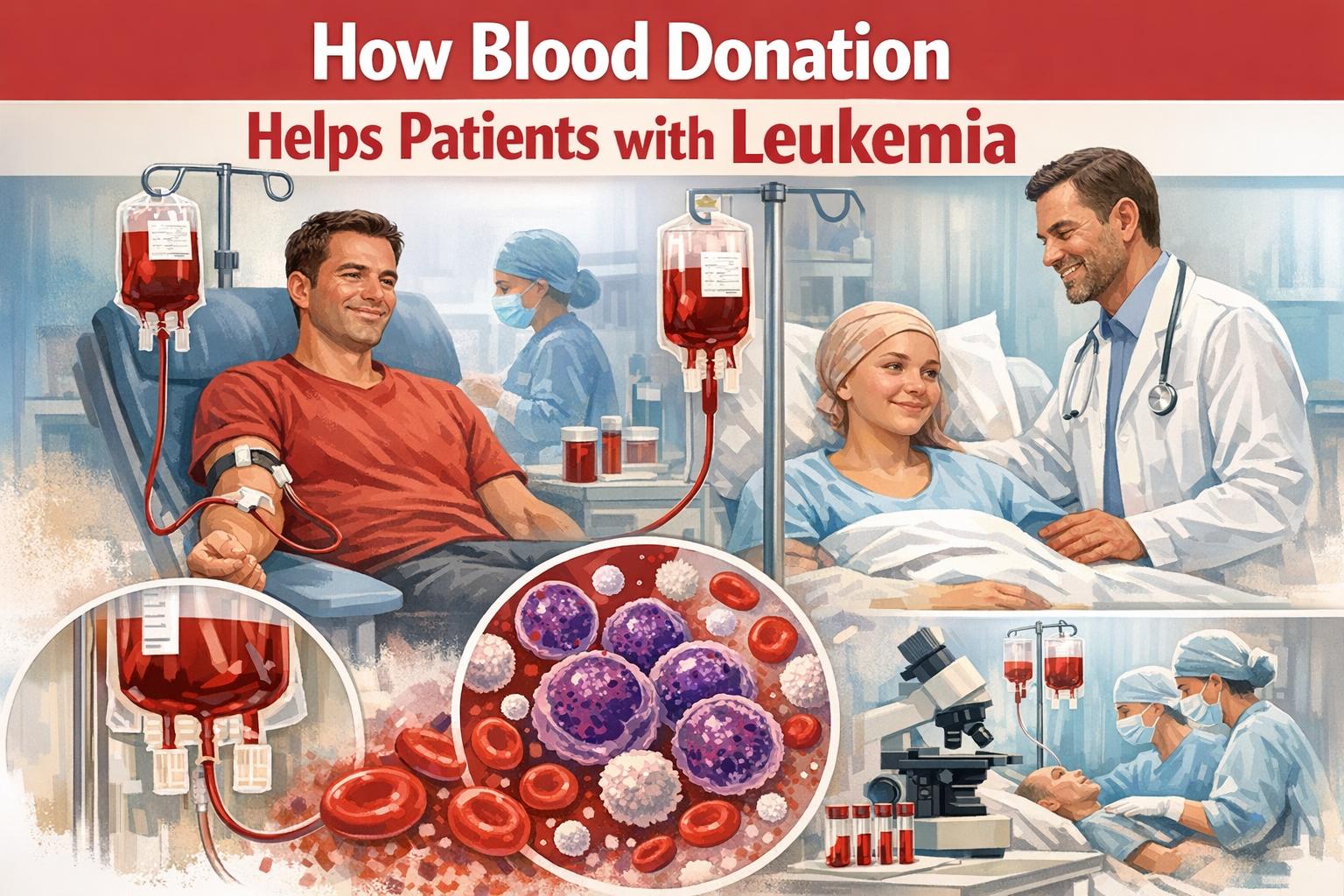
The Importance of Blood Donation for Leukemia Patients
Blood donation plays a crucial role in the treatment and long-term management of patients diagnosed with leukemia. Leukemia is a group of cancers that originate in the bone marrow and result in the uncontrolled production of abnormal white blood cells. These abnormal cells crowd out healthy blood-forming cells, impairing the body’s ability to transport oxygen, fight infections, and control bleeding. Because of these disruptions, many individuals with leukemia depend heavily on donated blood products throughout their treatment. The availability of a stable and safe blood supply is therefore not supplementary but fundamental to modern leukemia care.
The reliance on transfusion support begins early in the diagnostic and treatment process. From the time leukemia is suspected and confirmed through laboratory testing, patients often show significant abnormalities in their blood counts. These abnormalities can worsen during treatment, particularly during chemotherapy, radiation therapy, or stem cell transplantation. In this clinical context, blood donation becomes an essential component of supportive care, allowing physicians to manage symptoms, reduce complications, and maintain physiological stability while addressing the underlying disease.
Understanding Leukemia and Its Impact
Leukemia develops in the bone marrow, the soft tissue inside bones responsible for producing red blood cells, white blood cells, and platelets. In healthy individuals, this production process is tightly regulated. In leukemia, genetic mutations disrupt normal cell maturation and growth, leading to the accumulation of immature or dysfunctional white blood cells. These malignant cells multiply rapidly and occupy space in the bone marrow, limiting the production of healthy blood components.
There are several major types of leukemia, broadly categorized as acute or chronic and as lymphocytic or myeloid. Acute leukemias tend to progress quickly and require immediate treatment, while chronic leukemias may develop more gradually. Regardless of type, most forms of leukemia interfere with normal blood formation at some stage of the disease.
One of the primary consequences of disrupted blood production is anemia, caused by a deficiency of red blood cells. Anemia can result in fatigue, shortness of breath, dizziness, and decreased tolerance for physical activity. A second major issue is neutropenia, a reduction in functional white blood cells that compromises the immune system and increases susceptibility to infections. A third complication is thrombocytopenia, a shortage of platelets that impairs the body’s ability to form clots and prevent bleeding.
These deficiencies are not only symptoms of leukemia itself but also common side effects of its treatment. Chemotherapy and radiation therapy target rapidly dividing cells, including cancerous cells, but they also affect healthy bone marrow cells. As a result, blood counts often fall to critically low levels during therapy, making transfusion support a recurring necessity rather than a one-time intervention.
The Role of Blood Transfusions
Blood transfusions serve as a supportive therapy designed to replace specific blood components that are depleted in leukemia patients. Rather than treating the cancer directly, transfusions stabilize the patient and reduce immediate risks associated with low blood counts. This supportive function enables patients to tolerate aggressive treatments aimed at achieving remission.
Red Blood Cells (RBCs) are responsible for transporting oxygen from the lungs to tissues throughout the body. In leukemia patients experiencing anemia, RBC transfusions increase hemoglobin levels and restore the blood’s oxygen-carrying capacity. This can improve cognitive function, reduce fatigue, and prevent complications such as cardiac strain. Maintaining adequate hemoglobin levels is particularly important during intensive chemotherapy, when the body’s metabolic demands remain high despite reduced blood production.
Platelets are small cell fragments that initiate clot formation at sites of vascular injury. Low platelet counts significantly increase the risk of spontaneous bleeding, including nosebleeds, gum bleeding, gastrointestinal bleeding, or more dangerous internal hemorrhages. In severe cases, intracranial bleeding can occur, posing a life-threatening risk. Platelet transfusions are therefore often administered prophylactically when counts fall below established safety thresholds, even before active bleeding occurs.
Plasma, the liquid portion of blood, contains clotting factors and proteins essential for maintaining blood volume and coagulation balance. In certain situations, such as treatment-related coagulation disorders or complex clinical complications, plasma transfusions help restore proper clotting function. Although plasma transfusions are less frequent than red cell or platelet transfusions in leukemia care, they remain a valuable resource in specific cases.
Each of these components is collected from voluntary donors and processed to ensure safety and compatibility. Rather than transfusing whole blood in most cases, modern transfusion medicine separates donated blood into components, allowing one donation to benefit multiple patients and enabling targeted therapy based on individual needs.
Blood Transfusions During Chemotherapy and Stem Cell Transplantation
Chemotherapy remains a cornerstone of leukemia treatment. It aims to eliminate malignant cells in the bone marrow and bloodstream. However, because chemotherapy suppresses overall bone marrow function, patients often experience periods of profound cytopenia, during which red blood cells, white blood cells, and platelets are all significantly reduced.
During these periods, transfusions are frequently required at regular intervals. A patient undergoing intensive chemotherapy for acute leukemia may require multiple units of red blood cells and several platelet transfusions over the course of treatment. This dependence can extend for weeks or months until the bone marrow recovers or until remission is achieved.
Stem cell transplantation, also referred to as bone marrow transplantation, represents another treatment modality for certain forms of leukemia. Prior to transplantation, patients typically receive high-dose chemotherapy or radiation to eradicate diseased marrow. This conditioning phase results in near-complete suppression of blood cell production. Until the transplanted stem cells engraft and begin producing new blood cells, patients rely entirely on transfusion support. Without a steady supply of donated blood products, such advanced therapies would not be feasible.
Safety, Matching, and Quality Control
The safe administration of blood transfusions depends on rigorous testing and compatibility matching. Prior to transfusion, donated blood undergoes comprehensive screening for infectious agents, including viral and bacterial pathogens. Advanced laboratory testing ensures that the risk of disease transmission remains extremely low.
Compatibility testing also involves matching blood types based on the ABO and Rh systems, along with extended antigen profiling in patients who receive repeated transfusions. Leukemia patients who require long-term transfusion support may develop antibodies against certain blood cell antigens, complicating future transfusions. Careful crossmatching minimizes the risk of transfusion reactions and ensures optimal outcomes.
In addition to compatibility testing, blood banks adhere to strict storage and handling protocols. Red blood cells are refrigerated and have a limited shelf life, typically up to several weeks. Platelets require room-temperature storage with continuous agitation and expire within a few days. These storage constraints underscore the importance of continuous blood donation to maintain an adequate and timely supply.
Blood Donation as a Sustained Need
The need for blood donation extends beyond isolated emergencies. Leukemia patients often require ongoing transfusion support throughout the duration of their illness. Chronic transfusion dependence can persist even after remission in some cases, particularly if bone marrow recovery is incomplete.
Because blood products cannot be manufactured synthetically on a large scale, healthcare systems rely entirely on voluntary donors. The demand is further influenced by demographic factors, medical advancements, and the prevalence of conditions requiring transfusions. Any decline in donation rates can create shortages that directly affect vulnerable populations, including those with leukemia.
Seasonal variations, public health crises, and logistical challenges may disrupt blood collection efforts. Maintaining public awareness about the consistent need for donation is therefore essential. A stable donor base allows hospitals to respond to routine requirements as well as unexpected surges in demand.
Eligibility and Donation Process
Individuals interested in contributing to the blood supply typically undergo a screening process to ensure both donor and recipient safety. Eligibility criteria often include minimum age and weight requirements, general good health, and the absence of certain medical conditions. A brief health questionnaire and a mini-physical examination are conducted before donation.
The donation process itself generally takes less than an hour. Whole blood donation involves the collection of approximately one pint of blood, which the body replenishes over time. In some centers, donors may also provide specific components, such as platelets, through a process called apheresis. This method allows for targeted collection while returning unused components to the donor.
Following donation, blood is processed, separated into components, tested, and distributed to hospitals. Each unit collected can support multiple patients when separated into red cells, platelets, and plasma. For leukemia patients in particular, platelet donations are often in high demand due to their short shelf life and frequent need.
Long-Term Impact on Patient Outcomes
The availability of reliable transfusion support has significantly improved survival rates for leukemia patients over the past several decades. Advances in chemotherapy, targeted therapies, and stem cell transplantation would not achieve their full potential without concurrent improvements in transfusion medicine. Blood donation enables clinicians to administer intensive treatments safely and manage complications effectively.
From a clinical perspective, transfusions help maintain physiological stability, reduce hospitalization risks associated with severe anemia or bleeding, and allow patients to complete prescribed treatment regimens. For pediatric patients, who represent a significant portion of acute leukemia cases, transfusion support is especially critical due to their developing physiology and sensitivity to low blood counts.
In research settings, continued innovation in blood storage, pathogen reduction, and donor screening further enhances the safety and efficacy of transfusion practices. However, these technological advancements do not replace the foundational requirement for voluntary donors.
In conclusion, blood donation constitutes a central element of leukemia treatment infrastructure. Leukemia disrupts normal blood production, creating life-threatening deficiencies that are routinely managed through transfusion support. Red blood cells, platelets, and plasma each serve distinct and essential functions in maintaining patient stability during therapy. The complex processes of screening, matching, and storage ensure safety and effectiveness, but they depend entirely on a continuous supply of donated blood. Sustained participation in blood donation programs directly supports the medical management of leukemia and enables healthcare providers to deliver comprehensive, evidence-based care.