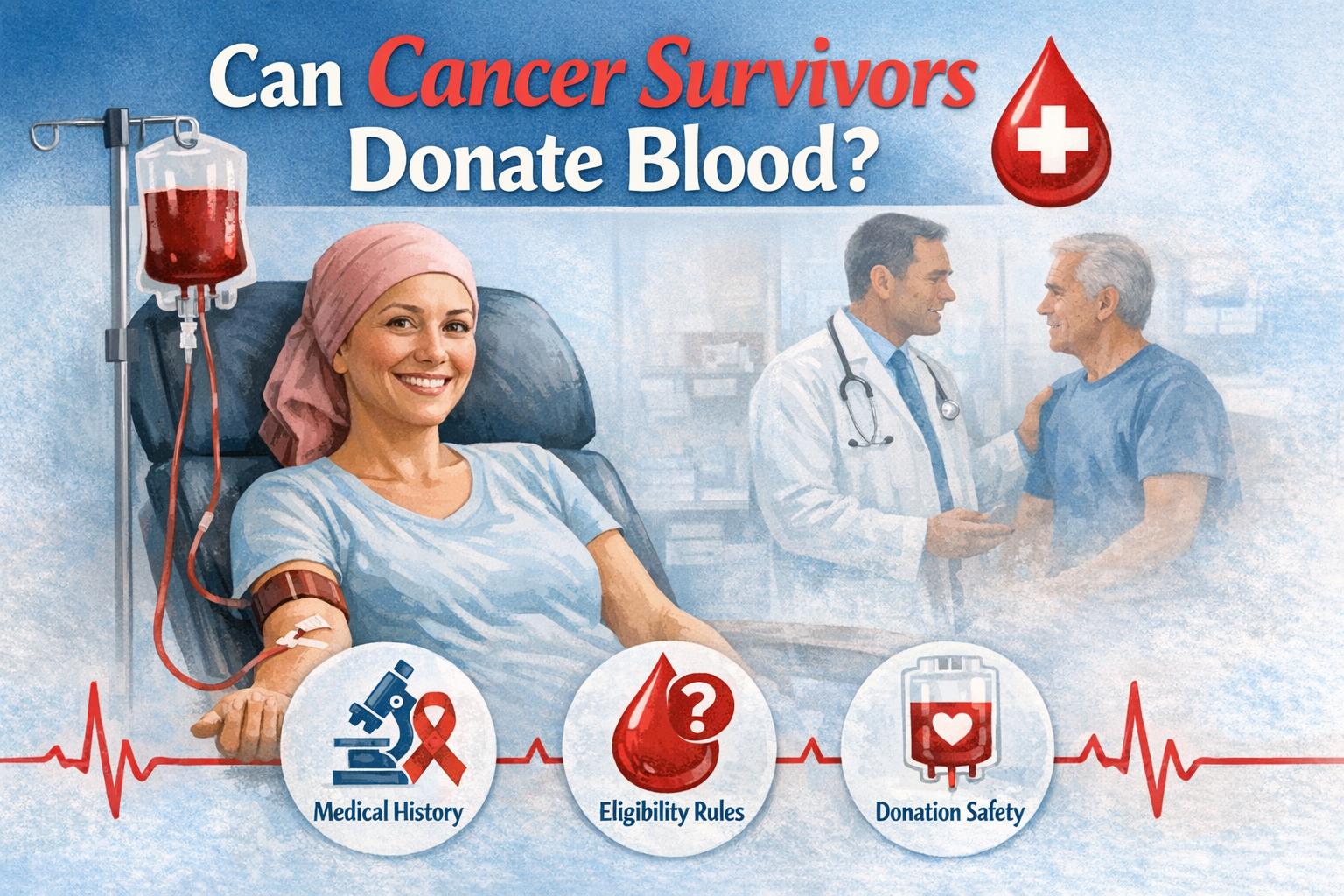
Understanding Blood Donation for Cancer Survivors
Cancer survivors frequently seek meaningful ways to contribute to their communities after completing treatment. Blood donation is one such avenue, as donated blood remains essential for surgeries, trauma care, chronic illness management, and cancer treatment itself. However, determining whether a cancer survivor is eligible to donate blood requires careful consideration of medical history, current health status, and established regulatory guidelines. Eligibility is influenced by the type of cancer diagnosed, treatments administered, the length of time since remission, and the policies of the blood collection organization.
Blood donation systems are designed to protect both donors and recipients. For cancer survivors, this protective framework ensures that donating blood does not compromise the survivor’s health or introduce potential risks to those receiving transfusions. Understanding the relevant medical and regulatory factors helps clarify who may donate and under what circumstances.
General Guidelines for Blood Donation Eligibility
All prospective donors, regardless of medical history, must meet baseline eligibility standards. These standards typically include minimum age and weight requirements, adequate hemoglobin or hematocrit levels, stable vital signs, and an overall state of good health on the day of donation. Donors must also complete a detailed health questionnaire and undergo a brief screening evaluation to identify any conditions that may pose a risk.
For cancer survivors, additional scrutiny is applied to ensure that the prior diagnosis and any associated treatments do not create long-term concerns. Blood donation agencies follow national and international regulatory frameworks developed to minimize potential harm. While these standards may vary slightly by country or organization, the core principle remains consistent: ensure donor safety and recipient safety through careful assessment.
Types of Cancer and Their Impact on Eligibility
The type of cancer previously diagnosed plays a central role in determining eligibility. Blood cancers, such as leukemia, lymphoma, multiple myeloma, and other hematologic malignancies, generally result in permanent deferral from blood donation. The rationale is that these diseases originate in the blood or bone marrow and may carry long-term systemic implications, even after remission.
In contrast, certain solid tumors may not automatically result in permanent deferral. Individuals who have had localized cancers that were treated successfully and have not recurred may be eligible after a defined waiting period. Common examples include early-stage breast cancer, colon cancer, or prostate cancer, provided the disease was confined to its site of origin and has been fully treated.
Skin cancers are evaluated differently depending on type. Basal cell carcinoma and squamous cell carcinoma of the skin, when completely excised and without spread, often allow for blood donation once treatment is complete and the individual has recovered. However, a history of melanoma may lead to longer deferral periods or permanent ineligibility in some jurisdictions due to its higher potential for metastasis.
Carcinoma in situ, which involves abnormal cells that have not invaded surrounding tissues, may carry fewer restrictions. Once appropriately treated and resolved, individuals with this diagnosis may become eligible after a waiting period determined by the collecting authority.
Remission and Time Since Treatment
The length of time a cancer survivor has been in remission is another significant factor. Many blood donation organizations require a minimum cancer-free interval before considering eligibility. This period often ranges from one to five years, depending on the type of cancer and the treatments involved.
The purpose of this waiting period is multifaceted. First, it allows sufficient time to monitor for recurrence, as the risk of relapse is typically higher in the years immediately following treatment. Second, it provides an opportunity for the survivor’s body to recover from the physical effects of surgery, chemotherapy, radiation, or other therapies. Third, it ensures that any lingering side effects that may affect blood composition or overall health have stabilized.
Being “cancer-free” generally means that there is no evidence of active disease and that all primary treatments have been completed. Ongoing maintenance therapies or long-term medications may influence eligibility depending on their nature and impact on health.
Treatment Modalities and Their Long-Term Effects
Cancer treatments can have temporary or permanent effects on the body, some of which directly relate to blood donation suitability. Surgery alone, when fully healed, may have limited long-term implications for blood donation. However, chemotherapy and radiation therapy can affect bone marrow function, immune competence, and organ health.
Chemotherapy targets rapidly dividing cells, including those in the bone marrow responsible for producing blood cells. Although many individuals recover normal blood cell production after treatment, some experience prolonged or permanent changes. Blood donation centers evaluate hemoglobin levels and overall blood counts to determine whether it is safe for a survivor to donate.
Radiation therapy may have localized or systemic effects, particularly if it involved large bone marrow–rich areas such as the pelvis or spine. Targeted radiation that did not significantly impact marrow reserves may pose less concern, but evaluation is individualized.
Certain systemic therapies, such as immunotherapy or targeted biologic treatments, can have complex and sometimes long-lasting effects on immune regulation. Hormone therapies used in breast or prostate cancer management may continue for years after other treatments conclude. While these medications may not universally disqualify a person from donating blood, they require disclosure and careful evaluation.
Stem cell transplantation, particularly allogeneic transplantation involving donor cells, often results in permanent deferral from blood donation. Autologous stem cell transplantation, using the individual’s own cells, may also restrict eligibility due to the intensity of prior treatment.
Health Status at the Time of Donation
Beyond cancer history, present-day health status plays a determining role. Cancer survivors must meet the same physiological criteria as any other donor. Adequate hemoglobin levels are especially important, as anemia may persist in some individuals after treatment. Chronic fatigue or cardiovascular limitations should also be considered when evaluating readiness to donate.
Blood donation removes a measurable volume of blood, typically around 450 to 500 milliliters in standard whole blood donation. For most healthy adults, this volume is well tolerated, and plasma volume is replenished relatively quickly. However, survivors with reduced physiological reserves or comorbidities must consider whether donation could lead to symptomatic lightheadedness, prolonged fatigue, or other adverse effects.
Regular follow-up care with oncology and primary care providers may include laboratory evaluations that reveal whether blood counts are stable. Sharing recent laboratory results with donation center staff, when requested, can assist in eligibility assessment.
Medications and Ongoing Medical Monitoring
Ongoing medications influence donation eligibility independently of cancer history. Some medications require temporary deferral due to their potential risks to recipients. These may include drugs with teratogenic effects, strong immunosuppressants, or agents that interfere with platelet function.
Cancer survivors frequently take medications for supportive care, including hormone modulators, bisphosphonates, or long-term targeted therapies. The acceptability of blood donation while on these medications depends on regulatory policies and evidence regarding the safety of transfusing blood from individuals taking such agents.
Additionally, some survivors remain under active surveillance with periodic imaging or laboratory tests but are not receiving active treatment. Being under surveillance does not automatically preclude donation, provided there is no active disease and no contraindicated medication use.
The Screening and Consultation Process
Blood donation involves a structured screening process conducted before each donation. This includes a confidential health questionnaire addressing medical history, travel, infectious risk factors, and prior diagnoses. For cancer survivors, accurate disclosure is essential to ensure that eligibility determinations are based on complete information.
A brief physical examination typically follows, including measurement of temperature, pulse, blood pressure, and hemoglobin levels. Any deviation from acceptable parameters may result in temporary deferral, even if unrelated to cancer history.
Consultation with a personal healthcare provider is advisable before attempting to donate blood. An oncologist or primary care physician can assess whether the survivor’s health has stabilized sufficiently and whether donation aligns with current medical guidance. Physicians are familiar with the details of a patient’s diagnosis, staging, and treatment course, allowing for personalized advice that complements general eligibility rules.
Blood donation centers may also have medical directors or specialists available to review complex cases. When uncertainty exists, providing documentation regarding diagnosis, treatment completion, and remission status may facilitate decision-making.
Regional and Organizational Variations
Eligibility criteria are influenced by national health authorities and individual blood collection organizations. While many policies share broad similarities, specific waiting periods and exclusions may vary by region. Regulatory bodies adopt conservative standards to ensure uniform safety across diverse populations.
Differences may arise in how various countries classify certain cancers, define remission periods, or interpret new therapeutic modalities. As cancer treatments evolve, with increasing use of precision medicine and immunotherapy, eligibility guidelines may adapt in response to emerging evidence.
Because of these variations, it is prudent for cancer survivors to review the policies specific to their geographic area and confirm requirements directly with the intended donation center. Online resources, telephone consultations, or in-person inquiries can clarify current standards.
Safety Considerations for Donors and Recipients
Blood transfusion recipients often include individuals with compromised immune systems, undergoing surgery, or experiencing acute trauma. Maintaining a safe blood supply is therefore essential. Deferral policies for cancer survivors are primarily precautionary and are not judgments about personal health. They reflect a commitment to minimizing theoretical risks, even when evidence of actual transmission risk is limited.
For donors, safety is equally important. Donation should not exacerbate existing health conditions or delay recovery from treatment. Survivors who have achieved stable health and meet criteria can often donate safely, but those who do not meet standards should not view deferral as a personal failing. Alternative forms of contribution remain available.
Alternative Ways to Contribute
Individuals who are ineligible to donate blood can still support blood donation efforts. Volunteering at blood drives, participating in awareness campaigns, or encouraging eligible friends and family members to donate are meaningful contributions. Financial support for cancer research or patient assistance programs also represents a constructive avenue for community involvement.
Some survivors may be eligible to donate specific blood components, such as platelets or plasma, under certain conditions, although this depends on the same underlying eligibility standards. Inquiry with the donation center can clarify whether alternative donation types are permitted.
Psychological and Ethical Dimensions
For many cancer survivors, the desire to donate blood reflects a broader intention to reengage with normal activities and support others facing medical challenges. Blood donation can symbolize a return to health and societal participation. Nevertheless, eligibility decisions must remain grounded in medical criteria rather than personal meaning.
Ethically, donation systems emphasize voluntary disclosure and honesty. Providing complete and accurate information ensures respect for recipients who rely on safe transfusions. Confidential screening processes are designed to support transparent communication without stigma.
Conclusion
Eligibility for blood donation among cancer survivors depends on a complex interaction of factors, including the type of cancer, the treatments received, the duration of remission, current health status, and medication use. Survivors of blood cancers are generally ineligible, while those with certain solid tumors or localized skin cancers may qualify after an appropriate waiting period. Treatment effects, particularly from chemotherapy, radiation, and stem cell transplantation, are central to the evaluation process.
Consulting healthcare providers and communicating with local blood donation centers provides clarity tailored to individual circumstances. While not all cancer survivors will meet the criteria for blood donation, many can become eligible after sufficient recovery and documented remission. For those who cannot donate, alternative forms of support help sustain the blood supply and broader healthcare system.
Ultimately, blood donation policies reflect a balance between inclusivity and safety. By understanding these guidelines and engaging in informed consultation, cancer survivors can determine whether blood donation is a suitable and responsible option within their ongoing health journey.