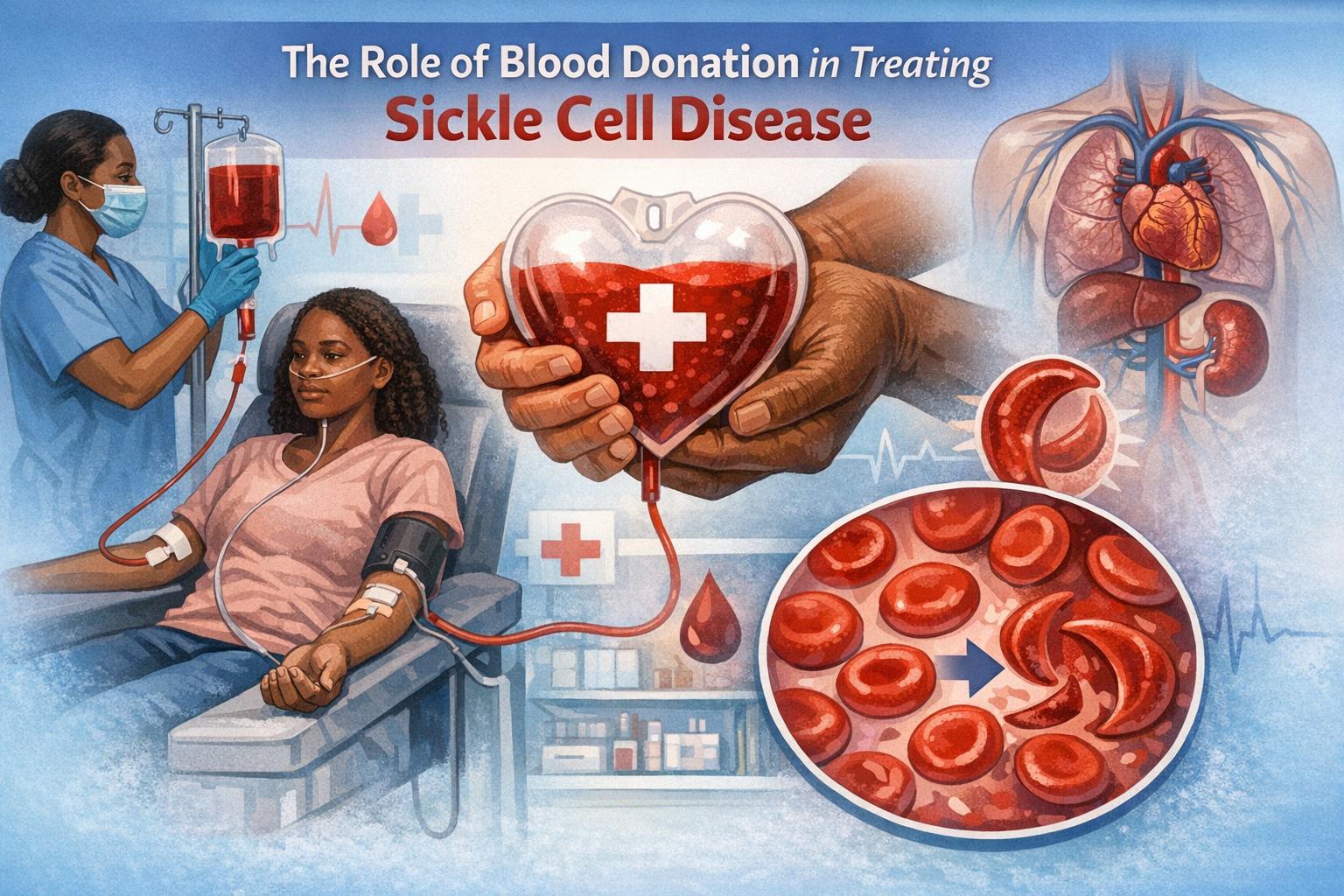
The Role of Blood Donation in Treating Sickle Cell Disease
Sickle cell disease (SCD) is a hereditary blood disorder that affects the structure and function of hemoglobin, the protein in red blood cells responsible for carrying oxygen throughout the body. In individuals with SCD, a genetic mutation leads to the production of hemoglobin S, which can cause red blood cells to become rigid and crescent-shaped under certain conditions. These altered cells are less flexible than normal red blood cells and can obstruct small blood vessels, impairing circulation and reducing oxygen delivery to tissues.
The consequences of this process are wide-ranging and often severe. Patients may experience chronic anemia, recurrent episodes of intense pain, increased susceptibility to infections, and progressive organ damage. Because the disease is lifelong and currently has limited curative options outside of hematopoietic stem cell transplantation and emerging gene therapies, much of medical management focuses on preventing complications and improving quality of life. Among the most established and effective supportive therapies is blood transfusion, which depends directly on reliable blood donation systems.
Understanding Sickle Cell Disease
Sickle cell disease is inherited in an autosomal recessive pattern. Individuals who inherit one sickle cell gene and one normal gene are carriers, often referred to as having sickle cell trait. Carriers typically do not experience the severe symptoms associated with the disease. However, when a child inherits two copies of the sickle cell gene, one from each parent, they develop SCD.
The condition is most commonly found in individuals of African descent, but it also occurs in people from the Mediterranean region, the Middle East, India, and parts of Central and South America. The global distribution reflects the historical protective effect of the sickle cell trait against severe malaria, which allowed the gene to persist in certain populations.
In SCD, red blood cells can change shape in response to low oxygen levels, dehydration, or infection. Unlike normal red blood cells, which are smooth and flexible, sickled cells are stiff and prone to clumping. These characteristics contribute to blockages in the microcirculation, leading to tissue ischemia and acute pain episodes known as vaso-occlusive crises. Repeated episodes over time can cause cumulative damage to organs such as the spleen, kidneys, lungs, and brain.
Chronic hemolytic anemia is another defining feature of SCD. Sickled red blood cells have a significantly shortened lifespan, often surviving only 10 to 20 days compared with approximately 120 days for normal cells. This rapid turnover contributes to persistent anemia, fatigue, and decreased oxygen-carrying capacity.
The Importance of Blood Transfusions
Blood transfusions are a central component of disease management in many individuals with SCD. By introducing healthy donor red blood cells into the circulation, transfusions help dilute the proportion of sickled cells and improve overall oxygen delivery. This approach can reduce the likelihood of vascular obstruction and mitigate both acute and chronic complications.
One of the most significant uses of transfusion therapy in SCD is stroke prevention. Children with SCD are at increased risk of ischemic stroke due to narrowing and damage of cerebral blood vessels. Regular transfusion programs have been shown to significantly decrease the risk of first and recurrent strokes in high-risk patients by maintaining lower concentrations of hemoglobin S in the bloodstream.
Transfusions are also used in the management of acute chest syndrome, a serious pulmonary complication characterized by chest pain, fever, respiratory distress, and new lung infiltrates on imaging. By improving oxygenation and reducing the proportion of sickled cells, transfusions can play a critical role in stabilizing patients during such events.
In addition, transfusion therapy may be employed before major surgical procedures to reduce perioperative complications. In these contexts, replacing or supplementing sickled blood with normal donor blood decreases the likelihood of anesthesia-related or postoperative crises.
Types of Blood Transfusions in SCD
There are two principal methods of transfusion therapy used in the management of sickle cell disease: simple transfusion and exchange transfusion. Each approach has specific indications and advantages.
- Simple Transfusion: In a simple transfusion, packed red blood cells from a donor are infused into the patient without removing the patient’s own blood. This method increases the total hemoglobin level and reduces the relative proportion of sickled cells by dilution. Simple transfusions are commonly used to treat symptomatic anemia or as part of chronic stroke prevention programs.
- Exchange Transfusion: Exchange transfusion involves the simultaneous removal of the patient’s blood and replacement with donor red blood cells. This technique more rapidly lowers the percentage of hemoglobin S and can be especially useful in emergency situations such as acute stroke or severe acute chest syndrome. Exchange transfusions may be performed manually or through automated apheresis systems, which allow for more precise control of blood component removal and replacement.
While both approaches are effective, the choice between them depends on clinical circumstances, available resources, and long-term treatment goals. Exchange transfusion is often preferred when a rapid and substantial reduction in hemoglobin S is required, whereas simple transfusions may be sufficient for routine management.
Long-Term Transfusion Therapy and Its Challenges
Many patients with severe sickle cell disease require chronic transfusion programs, sometimes receiving transfusions every three to four weeks. While this approach has clear benefits, it is associated with important challenges that require careful management.
One of the primary concerns is iron overload. Red blood cells contain iron, and repeated transfusions can lead to accumulation of excess iron in organs such as the liver, heart, and endocrine glands. Without treatment, iron overload can result in organ dysfunction. To mitigate this risk, patients on chronic transfusion therapy are often prescribed iron chelation therapy, which helps remove excess iron from the body.
Another major issue is alloimmunization. This occurs when a patient’s immune system recognizes antigens on donor red blood cells as foreign and produces antibodies against them. Alloimmunization can make it increasingly difficult to find compatible blood for future transfusions and may lead to delayed hemolytic transfusion reactions. Patients with SCD are at particular risk of alloimmunization, partly because of differences between common donor populations and recipient populations in terms of red blood cell antigen profiles.
To reduce this risk, blood banks often attempt to provide extended antigen matching for patients with SCD, especially for antigens in the Rh and Kell systems. This practice underscores the importance of having a diverse donor pool, as a broader range of donor backgrounds increases the likelihood of finding closely matched units.
Why Diversity in Blood Donation Matters
Because sickle cell disease disproportionately affects individuals of African ancestry, and because blood antigen distributions vary among populations, donors of similar ethnic backgrounds are more likely to provide compatible blood for these patients. Greater representation of African, Caribbean, Middle Eastern, and Mediterranean donors can significantly reduce the risk of alloimmunization and improve long-term transfusion outcomes.
A limited donor pool can delay the provision of compatible blood and complicate emergency care. In contrast, targeted recruitment and retention of donors from diverse communities strengthen the blood supply and enhance the safety and effectiveness of transfusion therapy for SCD patients.
Educational campaigns and community engagement efforts are important components of this strategy. Increasing awareness of the direct connection between blood donation and the care of individuals with sickle cell disease can help address misconceptions and encourage greater participation in donation programs.
Safety and Regulation of Blood Donation
Modern blood donation systems operate under strict regulatory standards designed to ensure safety for both donors and recipients. Donated blood undergoes comprehensive screening for infectious diseases, blood typing, and compatibility testing before it is released for clinical use. These processes have significantly reduced the risk of transfusion-transmitted infections.
Donors themselves are carefully evaluated prior to donation. Screening includes a health questionnaire and physical assessment to confirm that donation will not pose a risk to the individual. The procedure is generally well tolerated, and the body replenishes donated plasma within days and red blood cells within several weeks.
The reliability of blood supplies depends on consistent donor participation. Because red blood cells have a limited storage lifespan, typically up to 42 days, regular donations are necessary to maintain adequate inventory levels. This is particularly critical for patients requiring chronic transfusion support, such as many individuals with SCD.
How to Contribute
Individuals who wish to support the treatment of sickle cell disease through blood donation can contact reputable blood collection organizations. In the United States, the American Red Cross provides information on eligibility criteria, donation procedures, and appointment scheduling. In the United Kingdom, the NHS Blood and Transplant Service offers similar resources and operates nationwide donation programs.
Potential donors are encouraged to review eligibility guidelines, which address factors such as age, weight, medical history, and recent travel. In many regions, whole blood donation can be performed every eight to twelve weeks, while other donation types, such as platelet or plasma donation, may have different intervals.
Community blood drives and mobile donation units provide additional opportunities for participation. Increasing donor retention through repeat donations is particularly valuable, as consistent donors contribute to a stable and predictable blood supply.
Future Directions in SCD Treatment and the Continued Need for Donors
Research into curative therapies for sickle cell disease has advanced in recent years, including improvements in stem cell transplantation and the development of gene editing technologies. While these approaches offer promising long-term solutions for some patients, they are not yet universally accessible and may not be suitable for all individuals.
As a result, blood transfusion remains a fundamental aspect of SCD management worldwide. Even with emerging therapies, transfusion support will likely continue to play an essential role in acute care, perioperative management, and complication prevention.
Sustaining a safe, diverse, and adequate blood supply is therefore a public health priority. Blood donation is not simply an ancillary service but a direct and ongoing therapeutic necessity for many people living with sickle cell disease.
In summary, sickle cell disease is a complex genetic condition with significant medical consequences. Blood transfusion, supported by voluntary blood donation, constitutes a core element of its management. Through careful application of simple and exchange transfusion techniques, clinicians can reduce complications, prevent stroke, and improve survival. The success of these efforts depends on consistent donor participation and diversity within the donor population. Continued commitment to blood donation programs remains essential to ensuring that individuals with sickle cell disease receive effective and timely care.