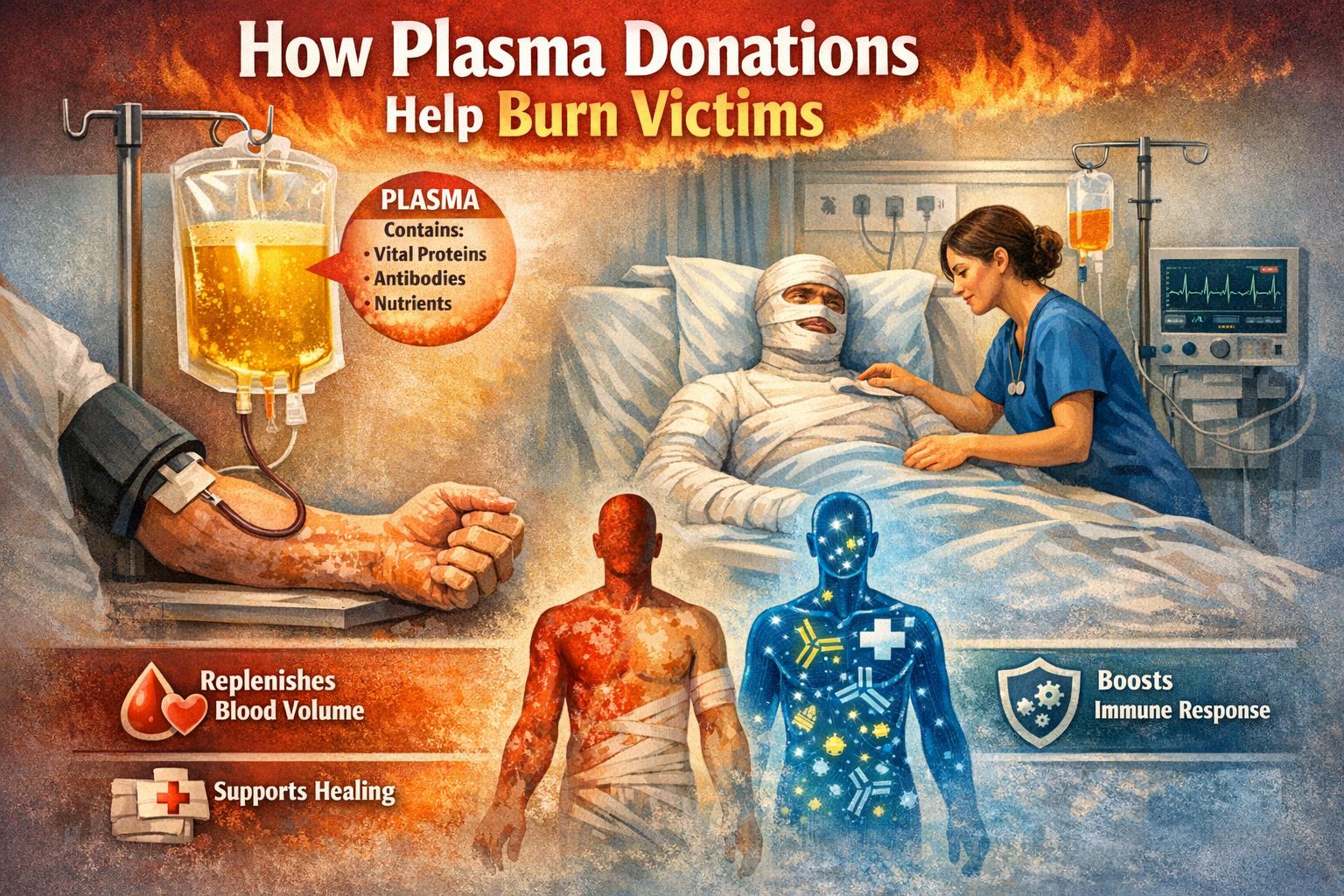
Understanding Plasma and Its Role in Burn Treatment
Plasma is the pale yellow liquid portion of blood that remains after red blood cells, white blood cells, and platelets are suspended within it. Representing approximately 55 percent of total blood volume, plasma serves as a transport medium and regulatory component essential to human physiology. It is composed of about 90 percent water, with the remaining portion consisting of proteins, electrolytes, hormones, nutrients, waste products, and dissolved gases. Among its most clinically significant elements are albumin, immunoglobulins, and clotting factors, each of which plays a central role in maintaining circulatory stability and supporting tissue repair.
In the context of burn care, plasma assumes a particularly important function. Severe burns disrupt the body’s ability to maintain fluid balance, vascular integrity, and immune defense. The damage extends beyond the visible injury to the skin and affects systemic processes critical for survival. Plasma, whether administered directly through transfusion or utilized in derivative therapies, helps address these physiological disruptions. Understanding how plasma interacts with the burn response provides insight into its therapeutic value.
The Physiological Impact of Severe Burns
Burn injuries are classified based on depth and total body surface area affected. While minor burns typically involve only superficial layers of skin, extensive or full-thickness burns can damage underlying tissues, blood vessels, and nerves. When a large percentage of the body is burned, systemic effects occur that influence nearly every organ system.
One of the immediate consequences of severe burns is increased vascular permeability. Heat and inflammatory mediators cause blood vessels to become more permeable, allowing fluids and proteins to leak into surrounding tissues. This process leads to edema and reduces the effective circulating blood volume. As a result, patients may experience hypovolemia, a state in which insufficient blood volume compromises oxygen delivery to tissues.
In addition to fluid shifts, burns trigger a complex inflammatory cascade. Cytokines and stress hormones alter metabolic rates, increase protein breakdown, and suppress aspects of immune function. The protective barrier of the skin is also compromised, leaving the body exposed to microbial invasion. Each of these factors contributes to the need for comprehensive supportive therapy, including plasma administration in appropriate cases.
The Importance of Plasma in Burn Recovery
Plasma transfusion supports burn recovery through multiple mechanisms. Its primary functions in this setting include restoration of circulating volume, stabilization of blood pressure, replacement of lost proteins, and provision of clotting factors necessary for hemostasis.
One of the most critical proteins in plasma is albumin. Albumin contributes significantly to oncotic pressure, the force that helps retain fluid within blood vessels. When albumin levels decline due to leakage and tissue damage, fluids escape into interstitial spaces, worsening swelling and reducing effective plasma volume. Administering plasma helps replenish albumin concentrations, thereby improving vascular stability.
Clotting factors present in plasma are equally significant. Severe burns can disrupt the normal clotting process due to tissue destruction, systemic inflammation, and dilution of coagulation proteins from aggressive fluid resuscitation. Replacement of clotting factors through plasma transfusion can help correct coagulopathy and reduce bleeding risks during surgical interventions such as wound debridement or skin grafting.
Maintaining Blood Volume and Pressure
Early management of extensive burns includes aggressive fluid resuscitation to prevent burn shock, a form of hypovolemic shock. Standard protocols often begin with crystalloid solutions, but plasma may be incorporated depending on the patient’s clinical status. While crystalloids replace water and electrolytes, they do not provide proteins. Plasma offers the advantage of restoring both volume and essential proteins simultaneously.
The maintenance of adequate blood pressure ensures sufficient perfusion of organs, including the kidneys, brain, and heart. Without proper intervention, decreased perfusion can lead to organ dysfunction. Plasma contributes to circulatory stability by enhancing oncotic pressure and supporting sustained intravascular volume. This support is particularly important during the first 24 to 48 hours following injury, when fluid shifts are most pronounced.
Clinical decisions regarding plasma administration are based on laboratory findings, hemodynamic measurements, and overall patient response to initial resuscitation. Physicians assess factors such as serum albumin levels, coagulation profiles, urine output, and vital signs to determine whether plasma therapy is indicated.
Enhancing the Immune Response
Another relevant aspect of plasma therapy in burn treatment involves immune protection. Plasma contains immunoglobulins, complement proteins, and other immune mediators that participate in pathogen recognition and clearance. Severe burns compromise the skin’s barrier function, increasing susceptibility to local and systemic infections.
Although plasma transfusion alone does not replace comprehensive infection control measures, it can provide passive immune components that support host defenses. Immunoglobulins found in plasma contribute to neutralizing bacteria and viruses, while complement proteins facilitate immune cell activation and microbial destruction.
Furthermore, maintaining adequate protein levels through plasma administration indirectly supports immune competence. Protein-energy malnutrition, which may develop during prolonged recovery, impairs immune responses. Replacing plasma proteins can therefore play a contributory role in sustaining overall physiological resilience during the acute phase of burn management.
Plasma-Derived Products in Burn Care
In addition to fresh frozen plasma used directly in transfusions, plasma serves as a source for several plasma-derived medicinal products. These include concentrated albumin solutions, immunoglobulin preparations, and specialized clotting factor concentrates. Each product addresses specific clinical needs.
Albumin solutions, for example, are frequently used in burn units when hypoalbuminemia persists despite crystalloid resuscitation. Concentrated albumin provides targeted oncotic support without the full range of plasma components. This approach allows clinicians to tailor therapy according to the patient’s evolving condition.
Clotting factor concentrates derived from plasma may be administered when laboratory results indicate deficiencies in specific factors. Such targeted therapy can be particularly useful during surgical reconstruction procedures that burn patients often require.
Wound Healing and Tissue Repair
Wound healing involves a coordinated sequence of inflammation, tissue formation, and remodeling. Plasma proteins are integral to this process. Fibrinogen, a soluble plasma protein, is converted into fibrin during clot formation. Fibrin creates a structural matrix that facilitates cell migration and tissue repair.
Growth factors transported in plasma also contribute indirectly to healing. While many growth factors originate from platelets and local tissue cells, the circulatory system distributes nutrients and hormones essential for cellular regeneration. By maintaining adequate plasma composition, clinicians help support the metabolic demands of healing tissues.
Severe burns often require surgical excision of nonviable tissue followed by skin grafting. Optimal graft adherence depends on adequate perfusion and minimal bleeding at the graft site. The clotting support and volume stabilization provided by plasma can improve surgical outcomes when carefully integrated into perioperative care.
The Process of Plasma Donation
Plasma used in medical treatment originates from volunteer donors. The standard procedure for collecting plasma is known as plasmapheresis. During plasmapheresis, blood is drawn from the donor and passed through a sterile collection system. A machine separates plasma from cellular components through centrifugation or membrane filtration. The red blood cells and platelets are then returned to the donor’s circulation, along with a sterile saline solution to maintain fluid balance.
Because red blood cells are returned, donors can typically give plasma more frequently than whole blood, subject to regulatory guidelines. The body replenishes donated plasma volume within approximately 24 to 48 hours, while plasma proteins are restored over several days.
Strict screening protocols are implemented to ensure donor and recipient safety. Potential donors undergo medical history assessments, physical examinations, and laboratory testing to identify infectious diseases or other contraindications. Collected plasma is further screened and processed to meet regulatory standards before clinical use.
Safety and Storage of Plasma
After collection, plasma intended for transfusion is commonly frozen to preserve clotting factors and protein integrity. Fresh frozen plasma must be thawed prior to administration and used within specified time frames to ensure efficacy. Proper storage conditions are essential for maintaining stability and preventing contamination.
Modern transfusion practices include blood typing and compatibility testing to minimize the risk of adverse reactions. Although plasma transfusion is generally safe, it carries potential risks such as allergic reactions, transfusion-related acute lung injury, and circulatory overload. Careful patient selection and monitoring reduce these risks significantly.
Significance of Donor Plasma in Burn Treatment Systems
The availability of donor plasma influences the capacity of healthcare systems to manage complex cases. Burn centers, particularly those treating extensive injuries, rely on a consistent supply of plasma and plasma-derived products. In regions with limited donation rates, treatment options may be constrained.
Plasma is also used in other medical contexts, including trauma resuscitation, liver disease management, and treatment of clotting disorders. Competing clinical demands highlight the importance of organized blood collection systems and responsible utilization strategies.
Efficient inventory management ensures that plasma of different blood types is available when urgently needed. Since plasma contains antibodies that may react with incompatible blood groups, matching protocols are critical. Group AB plasma is often considered a universal option for emergency use because it contains no anti-A or anti-B antibodies, but its relative scarcity requires careful allocation.
Ethical and Regulatory Considerations
Plasma donation and transfusion practices operate within established ethical frameworks and regulatory oversight. Donor consent, privacy protection, and equitable distribution policies are integral to maintaining public trust. Regulatory authorities set standards for screening, testing, storage, and distribution to mitigate risks.
In some countries, plasma collection involves both volunteer and compensated donors, while others rely exclusively on voluntary non-remunerated systems. Regardless of the model, adherence to safety protocols remains essential. Advances in pathogen inactivation technologies have further improved the safety profile of plasma products by reducing the likelihood of transmitting infectious agents.
Future Directions in Plasma-Based Burn Care
Research continues to refine the role of plasma in burn management. Clinical trials evaluate optimal timing, dosing strategies, and combinations with other resuscitative fluids. Some studies explore balanced transfusion approaches that integrate plasma, platelets, and red blood cells in specific ratios to emulate whole blood physiology.
Technological developments in plasma fractionation and synthetic alternatives may expand therapeutic options. For example, recombinant clotting factors reduce dependence on donor-derived plasma for certain conditions. Nonetheless, whole plasma and plasma-derived albumin remain central components of current burn treatment protocols.
Investigations into biomarkers and individualized medicine may lead to more precise guidelines for plasma administration. By analyzing patient-specific inflammatory markers and coagulation profiles, clinicians may be able to tailor interventions that improve outcomes while minimizing unnecessary transfusions.
Conclusion
Plasma constitutes a fundamental component of blood with diverse physiological functions. In the treatment of severe burns, its role extends beyond simple volume replacement. Through restoration of oncotic pressure, provision of clotting factors, and support of immune function, plasma contributes to stabilizing patients during a critical phase of injury.
The therapeutic use of plasma depends on a structured system of donation, screening, storage, and clinical application. Ongoing research continues to evaluate best practices and optimize patient care. As burn treatment evolves, plasma and its derivatives remain integral to comprehensive management strategies aimed at preserving organ function, supporting tissue repair, and maintaining systemic stability.