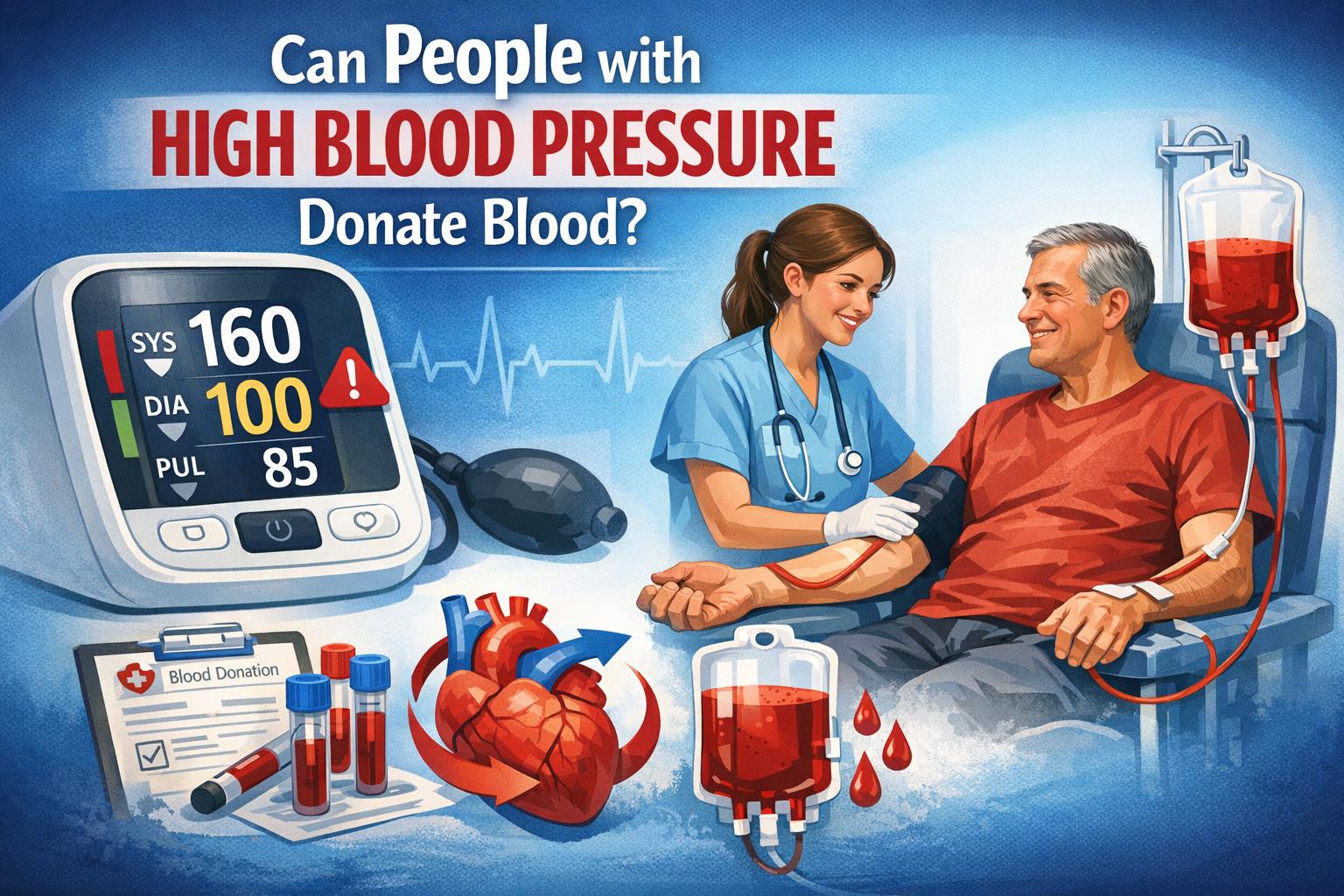
Understanding Blood Donation with High Blood Pressure
Blood donation plays a central role in modern healthcare systems. Hospitals depend on a steady supply of donated blood to perform surgeries, treat trauma patients, manage chronic illnesses, and respond to emergencies. While many individuals are willing to donate, questions about eligibility can create uncertainty. One of the most common concerns involves high blood pressure, also known as hypertension. Understanding how high blood pressure affects eligibility requires careful consideration of medical guidelines, donor safety, and recipient protection.
Definition of High Blood Pressure
High blood pressure is a medical condition in which the force exerted by circulating blood against the walls of the arteries remains consistently elevated. Blood pressure is measured using two numbers: systolic pressure, which reflects the force when the heart contracts, and diastolic pressure, which represents the force when the heart is at rest between beats. A typical normal reading is around 120/80 mmHg.
Current clinical guidelines generally classify blood pressure readings of 130/80 mmHg or higher as hypertension. The condition may develop gradually and often presents without noticeable symptoms. Because hypertension can persist undetected for many years, it is sometimes referred to as a silent condition. Persistent high blood pressure increases the risk of cardiovascular disease, stroke, kidney damage, and other complications.
Understanding the nature of hypertension is essential when considering blood donation. Blood donation temporarily reduces circulating blood volume, which can affect blood pressure levels. For individuals with well-managed hypertension, this temporary change is usually tolerated without difficulty. However, uncontrolled or severe hypertension may introduce additional risks.
General Eligibility Standards for Blood Donation
Blood donation centers operate under strict medical guidelines to protect both donors and recipients. Eligibility criteria typically address age, weight, general health status, recent illnesses, travel history, medications, and chronic conditions. Blood pressure measurement is a routine part of donor screening.
Although exact thresholds vary by country and organization, many blood services permit donation if blood pressure falls within a defined range at the time of screening. Commonly, systolic pressure must be below approximately 180 mmHg and diastolic pressure below 100 mmHg. These limits are designed to reduce the risk of complications during or immediately after donation.
Donors with controlled blood pressure are often eligible. Controlled hypertension refers to blood pressure that is consistently within acceptable limits, either through lifestyle modifications, medication, or a combination of both. Individuals whose readings are stable and who feel well are typically considered on a case-by-case basis.
If a prospective donor presents with significantly elevated readings during screening, even without symptoms, donation may be postponed. Temporary deferral allows the individual to seek medical advice and return once blood pressure is better controlled.
Safety Considerations for Donors with Hypertension
The primary concern in evaluating donors with high blood pressure is donor safety. The removal of approximately 450 to 500 milliliters of blood during a standard whole blood donation can cause a temporary decrease in blood pressure. Most healthy individuals compensate quickly through natural physiological mechanisms, including mild increases in heart rate and vascular constriction.
For individuals with untreated or poorly controlled hypertension, these adjustments may not function as effectively. There is an increased possibility of dizziness, fainting, or cardiovascular strain. In rare instances, severe fluctuating blood pressure could pose a more serious concern.
Another important consideration is the presence of symptoms indicating a hypertensive crisis. Symptoms such as severe headache, chest pain, shortness of breath, visual disturbances, or confusion suggest an urgent medical condition. Individuals experiencing these symptoms are not eligible to donate and require immediate medical evaluation.
Blood donation staff are trained to assess vital signs prior to donation and to identify warning signs. Their assessment includes reviewing medical history and asking questions about recent changes in health. This structured evaluation helps reduce risk and ensures that only those who can donate safely proceed with the process.
The Role of Blood Pressure Medications
Many individuals manage hypertension with medication. Common classes of antihypertensive drugs include diuretics, beta-blockers, ACE inhibitors, angiotensin receptor blockers, and calcium channel blockers. In general, the use of these medications does not automatically disqualify someone from donating blood.
Eligibility depends more on how effectively the medication controls blood pressure than on the medication itself. If a donor’s blood pressure remains within acceptable limits and no concerning side effects are present, blood donation is often permitted. However, donors must disclose all medications during the screening process.
Certain cardiovascular medications prescribed for more complex heart conditions may require additional evaluation. For example, medications prescribed after a recent heart attack or for unstable heart rhythm conditions may lead to temporary or permanent deferral. The distinction lies in the underlying medical condition rather than the presence of high blood pressure alone.
Transparent communication between donor and screening personnel is essential. Accurate disclosure helps medical staff determine suitability and ensures that both donor and recipient interests are protected.
Impact of Lifestyle Management on Eligibility
Lifestyle modification is a cornerstone of hypertension management. Dietary changes, reduced sodium intake, regular physical activity, weight management, moderation in alcohol consumption, and stress reduction contribute to blood pressure control. Individuals who successfully stabilize their blood pressure through these measures are often eligible to donate.
Maintaining adequate hydration is particularly important prior to donation. Dehydration can influence blood pressure readings and increase the likelihood of lightheadedness. Donors are typically advised to drink sufficient fluids and consume a balanced meal before donating. Skipping meals or arriving dehydrated can increase the risk of temporary side effects such as dizziness.
Regular monitoring of blood pressure at home or through healthcare providers can also support safe donation. Individuals who track their readings gain better awareness of their stability and can schedule donation when their levels are consistently within acceptable ranges.
Temporary Deferral and Reassessment
When a donor’s blood pressure exceeds allowable limits at the time of screening, the outcome is typically temporary deferral. This measure is precautionary. It does not permanently exclude the individual from donating. Instead, it allows time for reassessment.
Temporary deferral may occur even in individuals without a formal diagnosis of hypertension. Situational factors such as anxiety, stress, caffeine intake, or recent physical exertion can cause elevated readings. The phenomenon of “white coat hypertension,” in which blood pressure rises in medical settings, is well documented.
In many cases, donors who are deferred due to elevated readings can return after consulting a healthcare provider or after implementing recommended changes. Some donation centers encourage individuals to reattempt donation once readings return to acceptable levels.
Frequency of Donation for Individuals with Hypertension
Standard guidelines for whole blood donation typically allow donation every eight to twelve weeks, depending on national regulations. For individuals with high blood pressure, this frequency generally does not change, provided that their condition remains stable.
Ongoing monitoring is important. Blood pressure should be measured before each donation session. If changes in medication, new symptoms, or recent medical procedures occur, donors should inform staff during screening.
For some individuals with additional cardiovascular risk factors, healthcare providers may recommend a more cautious approach. Consulting a primary care physician before beginning regular donation is advisable, particularly if there is a history of heart disease, stroke, or kidney complications.
Effects of Blood Donation on Blood Pressure
Scientific research has explored whether blood donation has long-term effects on blood pressure. Some studies suggest that regular blood donation may slightly reduce blood pressure in certain individuals, particularly those with elevated baseline readings. This reduction is generally modest and should not replace standard hypertension treatment.
The mechanism behind this potential effect is not fully established. It may relate to temporary decreases in blood volume or iron levels. However, blood donation should not be viewed as a therapeutic intervention for hypertension. Medical professionals emphasize that structured treatment plans remain essential.
In the short term, most donors experience stable or slightly lower blood pressure after donation. Proper post-donation care, including rest and fluid intake, supports recovery. Blood volume typically normalizes within 24 to 48 hours, while red blood cell levels recover over several weeks.
Special Considerations for Older Adults
Hypertension becomes more prevalent with age. As a result, a significant portion of potential blood donors are older adults managing blood pressure through medication or lifestyle adjustments. Age alone does not disqualify someone from donating. Instead, overall health status and blood pressure stability are evaluated.
Older donors may have additional medical conditions such as diabetes, coronary artery disease, or kidney impairment. These conditions can influence eligibility independently of hypertension. A comprehensive screening process ensures that donation remains safe for older individuals while maintaining high safety standards for the blood supply.
Healthcare providers can help older adults determine whether regular donation is appropriate. Individualized assessment is particularly valuable in this population.
Guidance for Prospective Donors with High Blood Pressure
Individuals interested in donating blood while managing hypertension should begin by ensuring that their condition is properly monitored and treated. Routine medical follow-ups support long-term cardiovascular health and provide documentation of stability if needed.
Before donation, it is advisable to get adequate sleep, avoid excessive caffeine or alcohol, and maintain normal medication schedules unless instructed otherwise by a healthcare provider. Skipping prescribed blood pressure medication before donation is not recommended.
At the donation center, honest communication about medical history, recent changes in health, and medication use is critical. Screening personnel rely on accurate information to make informed decisions.
If uncertainty remains, a brief consultation with a physician can clarify whether donation is appropriate. This collaborative approach allows individuals to contribute safely to the blood supply while protecting their own health.
Conclusion
Individuals with high blood pressure are often eligible to donate blood, provided their condition is controlled and they are not experiencing symptoms of severe hypertension. Blood donation organizations assess blood pressure at each visit to ensure donor safety and maintain consistent standards. The presence of antihypertensive medication alone does not usually prevent donation, but stability and overall cardiovascular health are determining factors.
Temporary deferral may occur if blood pressure readings exceed accepted limits, yet many donors can return once levels are controlled. Maintaining communication with healthcare providers, adhering to treatment plans, and following preparation recommendations support a safe donation experience.
Blood donation remains a structured and carefully regulated process. Through standardized screening and individualized evaluation, donation centers enable many individuals with managed hypertension to participate safely in this essential public health activity.